
Born Above the Clouds
High in the Himalayan plateau, where the wind is sharp and the sky feels very close, the Changra goat survives in extreme cold. To protect itself, it grows a very fine undercoat beneath its outer hair. This soft fiber is what the world calls Pashmina.
It does not grow in factories. It grows because of altitude, snow, and time. The goats live in harsh landscapes where temperatures fall far below zero. Nature itself decides the quality. That is why real Himalayan Pashmina feels almost unreal in your hands, light like air, but warm like sunlight in winter.
The Slow Hands of Nepal
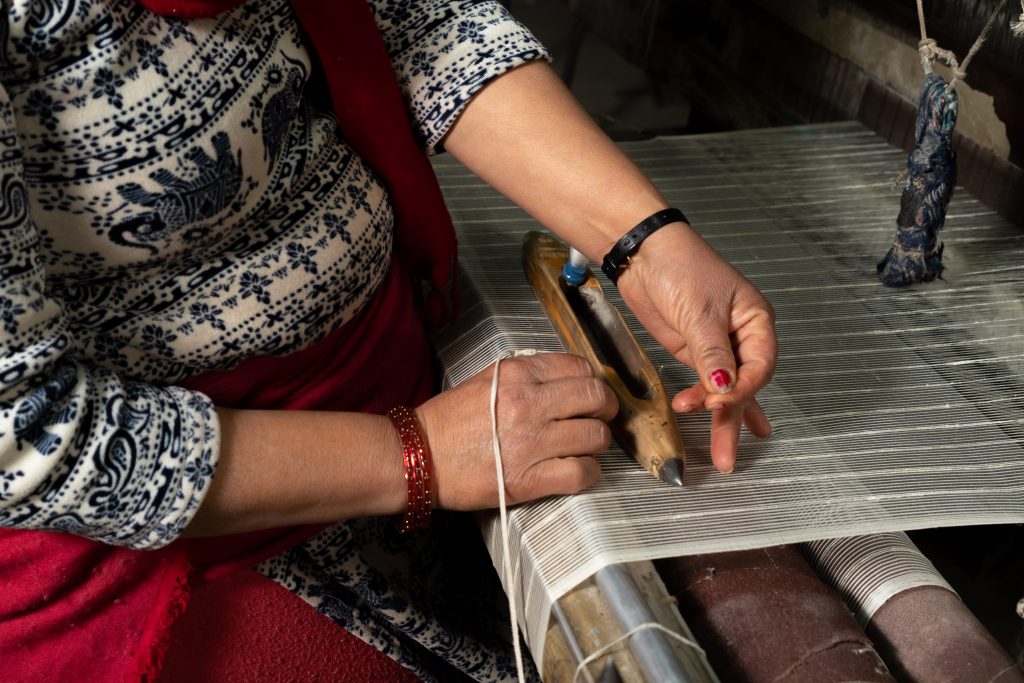
Once the fiber is carefully collected, the real work begins. In Nepal, artisans clean, separate, and spin the fibers by hand. The thread is so delicate that it demands patience. If rushed, it breaks. If handled carelessly, it loses strength.
Spinning is followed by loom weaving, often on traditional wooden looms that have been used for generations. The rhythm of weaving is calm and steady. There is no loud machine noise, only the sound of thread crossing thread. Sometimes the patterns are simple. Sometimes they are detailed and symbolic. But always, they are intentional.
You can actually feel the difference between something machine-made and something touched this many times by human hands. It is small details. Slight variations. A quiet character.
More Than Softness
Many brands talk about softness. Yes, Pashmina is incredibly soft. But softness alone is not the story. The real value is in the knowledge required to preserve the fiber’s integrity from beginning to end.
At Jemu Home, Pashmina is not treated as just a luxury scarf. It represents creative discipline, the balance between innovation and tradition. Colors may shift with modern taste. Designs may adapt for global homes. But the weaving principles remain the same as they were centuries ago.
There is a respect for origin. And maybe that is what makes it different.
Wearing Geography
When you wear authentic Himalayan Pashmina, you are wearing a landscape. The high altitude air. The mountain is cold. The quiet strength of people who have worked with this fiber for generations.
It drapes lightly over the shoulders, almost weightless. But it carries cultural depth. It warms gently, not aggressively. It feels personal.
In a world full of synthetic blends and fast fashion copies, real Pashmina feels calm. It does not shout. It simply exists with quiet confidence.
Living Heritage, Not Just Fashion
Owning a Pashmina piece from Jemu Home is not about status. It is about participation — being part of a long, careful lineage. Every thread holds patience. Every weave carries ancestral intelligence that cannot be downloaded or replicated.
It is a heritage you can touch.
And maybe that is why it feels sacred in a way. Not because it is expensive. But because it has survived, through mountains, through time, through hands that refused to rush beauty.