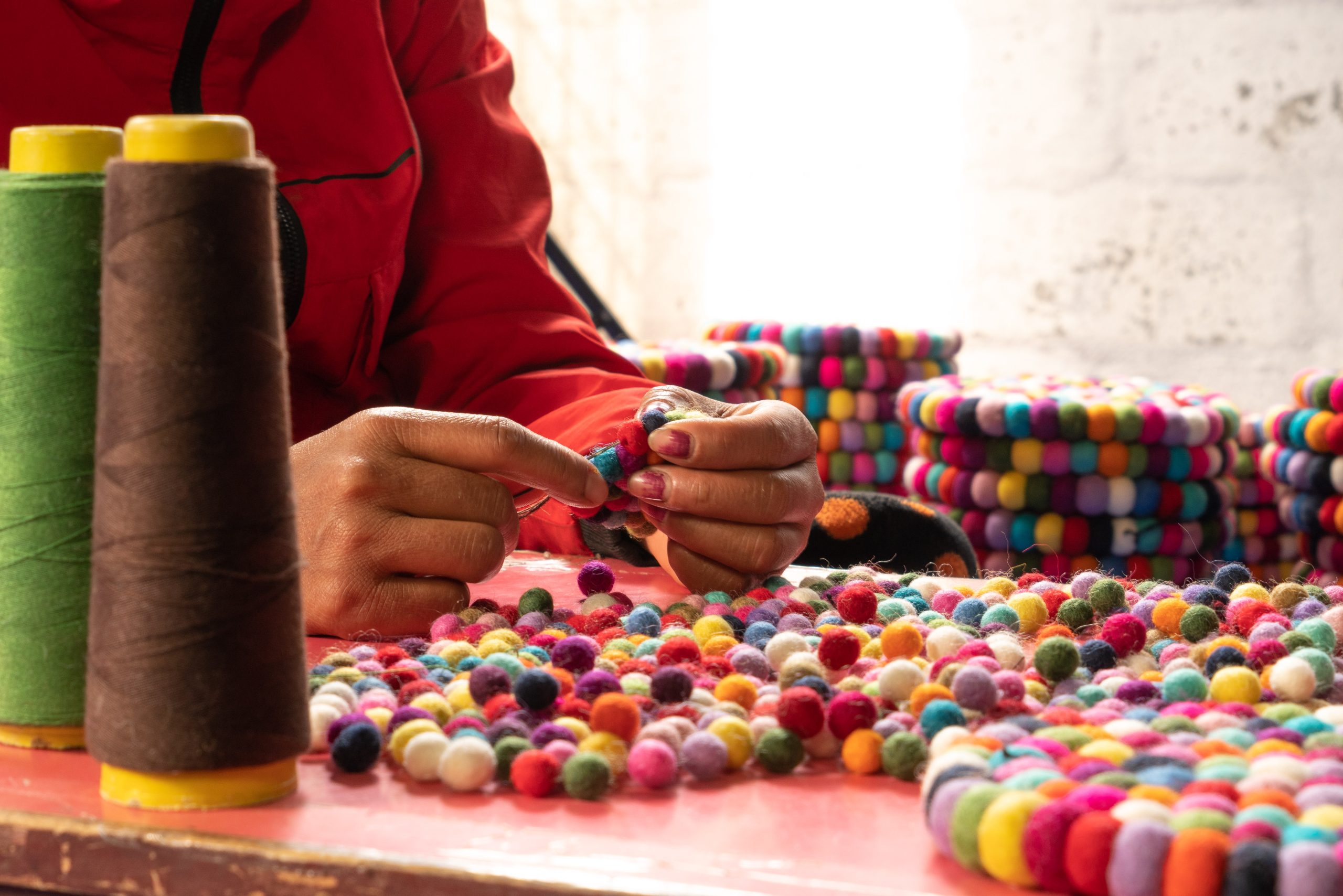
Importing handcrafted products from Nepal — felt toys, pashmina shawls, singing bowls, handmade rugs — is a well-established wholesale route for buyers across the United States, European Union, and Australia. The products are genuinely differentiated, the sourcing is direct from artisans, and demand for ethically made goods continues to grow. But before your first bulk shipment clears customs, you need a working understanding of how import duties apply to handmade products in your market.
This guide is written specifically for wholesale buyers who are either beginning the import process or looking to tighten their cost structure on reorders. We cover the relevant tariff classifications, duty rates, and preferential trade arrangements that apply to handmade Nepali goods across all three major import markets. By the end, you will have a clear baseline for what to expect at customs — and how to plan your landed cost accordingly.
How Tariff Classification Works for Handmade Goods
Every product you import is classified under a Harmonized System (HS) code — a globally standardized numerical system that determines the duty rate your shipment attracts. The same HS code framework is used across the USA, EU, and Australia, though the specific duty rates applied to each code vary by country.
Handmade products from Nepal span several HS chapters depending on the product type. Understanding which code applies to your product category is the first practical step in calculating your duty liability.
| Product Category | HS Chapter / Heading | Classification Notes |
| Felt Toys & Felt Products | Chapter 95 (toys) / Chapter 56 (felt) | Classification depends on primary use — toys vs. decorative felt items |
| Pashmina Shawls & Scarves | Chapter 61 / 62 (knit vs. woven) | Material composition (cashmere, wool blend) affects sub-heading |
| Singing Bowls & Chakra Sets | Chapter 83 (metal articles) | Hand-hammered metal goods — often classified under 8306 |
| Handmade Rugs | Chapter 57 (carpets & floor coverings) | Handmade vs. machine-made distinction is formally recognized |
| Assorted Handicrafts | Chapter 97 / 83 / 48 | Depends on primary material — consult a customs broker for mixed orders |
If you are placing a mixed wholesale order across multiple product categories, work with a licensed customs broker in your country to confirm the correct HS heading for each product line before shipment. Misclassification is a common — and costly — error for first-time importers.
Import Duties for USA-Based Buyers
General US Duty Rates on Nepali Goods
The United States and Nepal do not have a bilateral free trade agreement in place. This means Nepali goods enter the US under the Most Favored Nation (MFN) tariff rates applied to general trading partners. Duty rates vary by product:
• Felt products and textile-based items: typically 5–14% ad valorem
• Pashmina shawls and scarves: rates depend on fiber composition and knit/woven construction; cashmere-content goods generally attract lower rates than blended items
• Singing bowls and metal handicrafts: generally 0–3% for most metal articles under Chapter 83
• Handmade rugs: rates under Chapter 57 vary; hand-knotted or hand-woven rugs may attract specific sub-heading rates
You can verify current MFN duty rates using the US International Trade Commission’s online Harmonized Tariff Schedule (HTS) tool, which is publicly accessible and updated regularly.
Generalized System of Preferences (GSP) — Status Note
Nepal has historically been eligible for the US Generalized System of Preferences (GSP), which provides duty-free treatment on a range of eligible product categories. However, US GSP authorization has been subject to periodic renewal by Congress and its applicability should be confirmed at the time of your shipment. When active, GSP can significantly reduce or eliminate duty liability on qualifying handmade goods. Check current GSP eligibility status with your customs broker or via CBP (US Customs and Border Protection) resources before factoring it into landed cost calculations.
Section 301 Tariffs — Not Applicable to Nepal
The Section 301 tariffs introduced against Chinese goods do not apply to products sourced from Nepal. This is a meaningful distinction for buyers who have sourced from China previously and are now evaluating Nepal-based suppliers as an alternative.
Import Duties for EU-Based Buyers
EU Trade Arrangements with Nepal
Nepal benefits from the European Union’s Everything But Arms (EBA) initiative, which is part of the EU’s Generalised Scheme of Preferences (GSP+). Under EBA, Nepal — as a Least Developed Country (LDC) — is eligible for duty-free, quota-free access to the EU market on virtually all products, including textiles, handicrafts, and home goods.
In practical terms, this means EU wholesale buyers importing handmade Nepali products should face zero import duties on most product categories, provided that the goods meet the relevant Rules of Origin requirements.
Rules of Origin Compliance
To benefit from EBA preferential rates, the goods must originate in Nepal as defined by EU Rules of Origin. For handmade products sourced directly from Nepali artisans, meeting this requirement is generally straightforward — but the documentation must be in order:
• Goods must be accompanied by a Form A (Generalised System of Preferences Certificate of Origin) or, for certain shipments, a Statement on Origin
• The exporter in Nepal must be registered or authorized to issue origin declarations
• For textile and apparel goods, double transformation rules may apply — the fiber, yarn, and fabric processes must occur within Nepal
When working with Jemu Home, buyers receive properly documented shipments. Origin certification is a standard part of the export process for Nepali suppliers operating in the international wholesale market.
VAT on Imports
Separate from customs duties, EU buyers will also be subject to VAT on imported goods, applied at the point of import entry. VAT rates and reclaim mechanisms vary by member state — consult your local tax advisor for the specifics applicable to your business.
Import Duties for Australia-Based Buyers
Australia’s Trade Arrangements with Nepal
Australia and Nepal do not have a bilateral free trade agreement. Nepali goods enter Australia under the general MFN tariff schedule. However, Australia also operates an import duty concession system, and many handicraft and textile products attract relatively low base rates.
• Most textile products (Chapter 61/62): standard rates of 5–10%, though many items may qualify for concession
• Metal goods and handicrafts (Chapter 83): generally 0–5%
• Rugs and floor coverings (Chapter 57): standard rates typically 5–10%
• Felt products and toys: rates vary by sub-heading classification
Developing Country Preferential Rates
Australia’s Developing Country Preferential Tariff (DCPT) scheme provides reduced duty rates on goods originating from developing countries, including Nepal. Under DCPT, applicable duty rates are reduced — often to zero or near-zero — for eligible product categories. The Australian Border Force (ABF) website provides the current tariff schedule and DCPT rates.
For Australian wholesale buyers, it is worth verifying whether your specific product categories qualify for DCPT treatment, as this can meaningfully reduce your landed cost compared to standard MFN rates.
GST on Imports
As with VAT in the EU, Australian buyers will pay Goods and Services Tax (GST) at 10% on the taxable value of imports (customs value plus duty). GST is generally recoverable for GST-registered businesses. Factor this into your cash flow planning for new import orders.
Practical Steps Before Your First Bulk Order
Understanding the duty framework is useful. Applying it correctly to your specific product mix is what actually protects your margin. Here is the practical checklist for wholesale buyers approaching their first or next Nepali import order:
• Confirm HS codes: Work with a customs broker or use your country’s official tariff schedule tool to classify your specific products correctly before ordering
• Verify preferential rate eligibility: For US buyers, check current GSP status; for EU buyers, confirm EBA entitlement and Rules of Origin compliance; for Australian buyers, check DCPT applicability
• Request proper export documentation: Ensure your supplier provides a commercial invoice, packing list, bill of lading or airway bill, and any required certificates of origin
• Calculate landed cost before committing to bulk: Duty rate + freight + insurance + destination handling charges + VAT/GST gives you a realistic landed cost per unit
• Start with a sample order: Before committing to bulk volume, use a sample order to evaluate the product and get a real-world customs clearance experience with your broker
Key Takeaways
Importing handmade products from Nepal is a commercially viable route for wholesale buyers in the USA, EU, and Australia — and the duty picture is generally favorable, particularly for EU buyers benefiting from EBA zero-duty access and US buyers when GSP is active.
The most important steps are accurate HS classification, proper documentation, and working with a licensed customs broker who understands your market. These steps protect your margins, prevent clearance delays, and ensure your procurement process runs smoothly from the first sample order through to ongoing bulk reorders.
At Jemu Home, we support our wholesale buyers through the documentation process and ensure every shipment is correctly packaged with the export paperwork needed for smooth customs clearance — regardless of your destination market.
| Ready to start sourcing handcrafted products from Nepal? Contact Jemu Home via email or WhatsApp to request our product catalog and discuss your sample order. We work with wholesale buyers in the USA, EU, Australia, and beyond — and we make the process straightforward from first inquiry to bulk delivery. |
Jemu Home — jemuhome.com | Content Category: Documentation / Process | Target Keyword: Custom Duties Handmade Products Wholesale
Note: Duty rates and trade scheme eligibility are subject to change. Always verify current rates with a licensed customs broker before placing orders.